New Fake Electricity Bill Scam: Threatens Night Power Cuts
High Risk
Updated Today
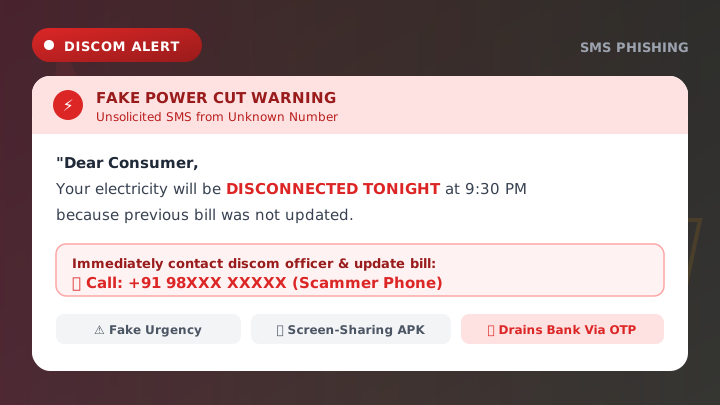
Fraudsters send urgent SMS messages threatening to disconnect your home's electricity tonight over an alleged unpaid bill. When panicking victims call the phone number provided, scammers trick them into downloading remote-access apps and empty bank accounts.
1
What is happening?
Citizens across India receive unsolicited SMS texts claiming their previous month's electricity payment was not updated.
The message warns that power will be disconnected tonight at 9:30 PM from the discom head office unless dues are settled immediately.
Fraudsters pose as official power engineers from state discoms (such as BESCOM, BSES, Tata Power, Mahavitaran, or UPPCL).
2
How they trick you
They include an unofficial 10-digit personal phone number in the SMS instead of the official state power helpline (1912).
When you call, the "officer" asks you to pay a nominal ₹10 recharge or install a helper APK file (AnyDesk, TeamViewer, or QuickSupport).
Once installed, scammers capture your phone screen, intercept incoming banking OTPs, and drain your account balance.
3
Three warning signs
Personal mobile sender: Sent from an unknown 10-digit phone number instead of a registered discom header (e.g. VM-BESCOM).
Severe artificial urgency: Threats of disconnection within a few hours (typically tonight at 9:30 PM).
Remote app installation request: Urging you to download third-party APKs or screen-sharing tools to update your meter.
4
What should you do?
Always verify your electricity bill directly on your official state electricity board portal or authorized UPI payment apps.
Never call phone numbers provided in unsolicited warning SMS texts.
Never download remote desktop applications or APK files requested by unknown callers.
If money was debited, call the National Cyber Crime Helpline at 1930 immediately and report on cybercrime.gov.in.
Banking / Phishing
Fake Bank KYC Update Scam: Fraudulent SMS Link Freezes Accounts
High Risk
Updated Yesterday
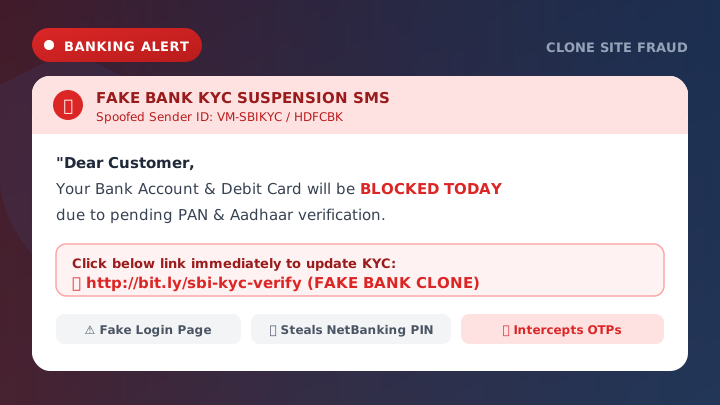
Scammers blast urgent SMS messages warning that your bank account or debit card will be blocked immediately due to expired KYC or unlinked PAN. The link provided leads to a deceptive clone website designed to steal your NetBanking password and OTP.
1
What is happening?
Bank customers across India receive alarming SMS alerts claiming their savings account, debit card, or NetBanking has been suspended.
The message instructs recipients to click a link to upload PAN card and Aadhaar details to avoid permanent account deactivation.
Scammers spoof sender names resembling major banks including SBI, HDFC, ICICI, PNB, and Axis Bank.
2
How they trick you
The SMS includes a disguised shortened link (such as bit.ly or deceptive domains like sbi-kyc-portal.online).
Clicking the link loads a replica login page that looks identical to your bank's real internet banking portal.
When you input your user ID, password, MPIN, and SMS OTP, scammers capture these inputs in real time to transfer your money.
3
Three warning signs
Clickable links in banking SMS: Reserve Bank of India (RBI) mandates strictly prohibit banks from sending clickable links for KYC updates.
Unfamiliar URL domain: The browser address bar shows strange extensions like .top, .xyz, or extra hyphens rather than the official bank domain.
Request for OTP or PIN on form: Genuine KYC portals never require your NetBanking password, ATM PIN, or transaction OTPs.
4
What should you do?
Never click links inside SMS, WhatsApp messages, or emails claiming to update your bank KYC.
Only update KYC details by visiting your official bank branch in person or through your verified mobile banking app.
Never share your OTP, UPI PIN, or NetBanking password with anyone under any circumstances.
If you entered credentials on a suspicious link, immediately contact your bank's emergency hotline to freeze your card and account.
Job / Task Trap
Fake Work From Home Job Scam: The YouTube Video Like Trap
Medium Risk
Updated 2 Days Ago
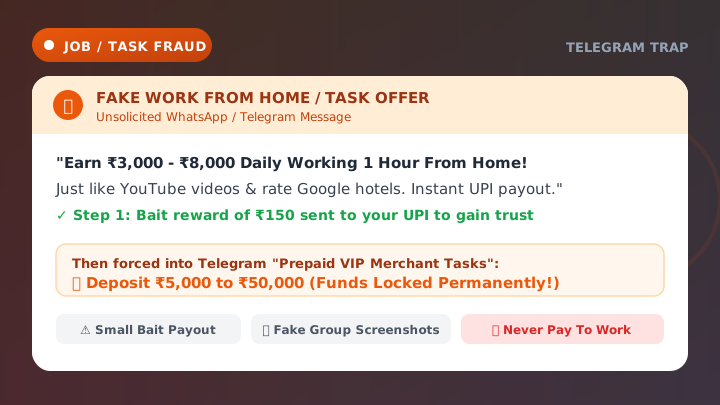
Scammers promise ₹3,000 to ₹5,000 daily for easy online tasks like liking YouTube videos or rating hotels. After paying small initial rewards to win your trust, they demand large upfront deposits for "prepaid tasks" and freeze your money.
1
What is happening?
Victims receive unsolicited WhatsApp or Telegram messages from recruiters offering ₹2,500 to ₹8,000 daily for remote part-time work.
Tasks involve simply liking YouTube videos, following Instagram profiles, or giving 5-star ratings on Google Maps.
The scam targets students, homemakers, and job seekers looking for flexible work-from-home earnings.
2
How they trick you
The Bait Payout: You complete 3 trial video likes and they genuinely transfer ₹150 to ₹300 via UPI to build trust.
The Telegram Migration: You are added to a "VIP Telegram Group" filled with fake accounts posting fabricated earnings screenshots.
The Deposit Trap: They introduce "prepaid merchant tasks" requiring you to deposit ₹5,000 to ₹50,000. When you try to withdraw, they demand more fees and disappear.
3
Three warning signs
Foreign phone numbers: Job messages sent unprompted from international codes (+62, +84, +234, etc.) claiming to be Indian HR recruiters.
Unrealistic income: Thousands of rupees offered for tapping like buttons on public videos.
Paying money to get paid: Any job requirement asking for upfront deposit, registration fees, or crypto transfers is always a scam.
4
What should you do?
Remember the golden rule: Genuine companies NEVER charge money, registration fees, or task security deposits from job seekers.
Immediately report and block unsolicited recruiters on WhatsApp and Telegram.
Never transfer money to unknown UPI handles or mule bank accounts.
If money was lost, report immediately to the National Cyber Crime portal (cybercrime.gov.in) and call 1930.
Fell for a scam? Act within the Golden Hour
National Cyber Crime Reporting Helpline (Govt. of India)